What is WEDA Node?
WEDA Node is an edge software agent that runs on Advantech industrial devices, enabling seamless remote management and monitoring of edge infrastructure. It serves as the intelligent bridge between edge devices and WEDA Core, providing real-time visibility and control over distributed IoT deployments.
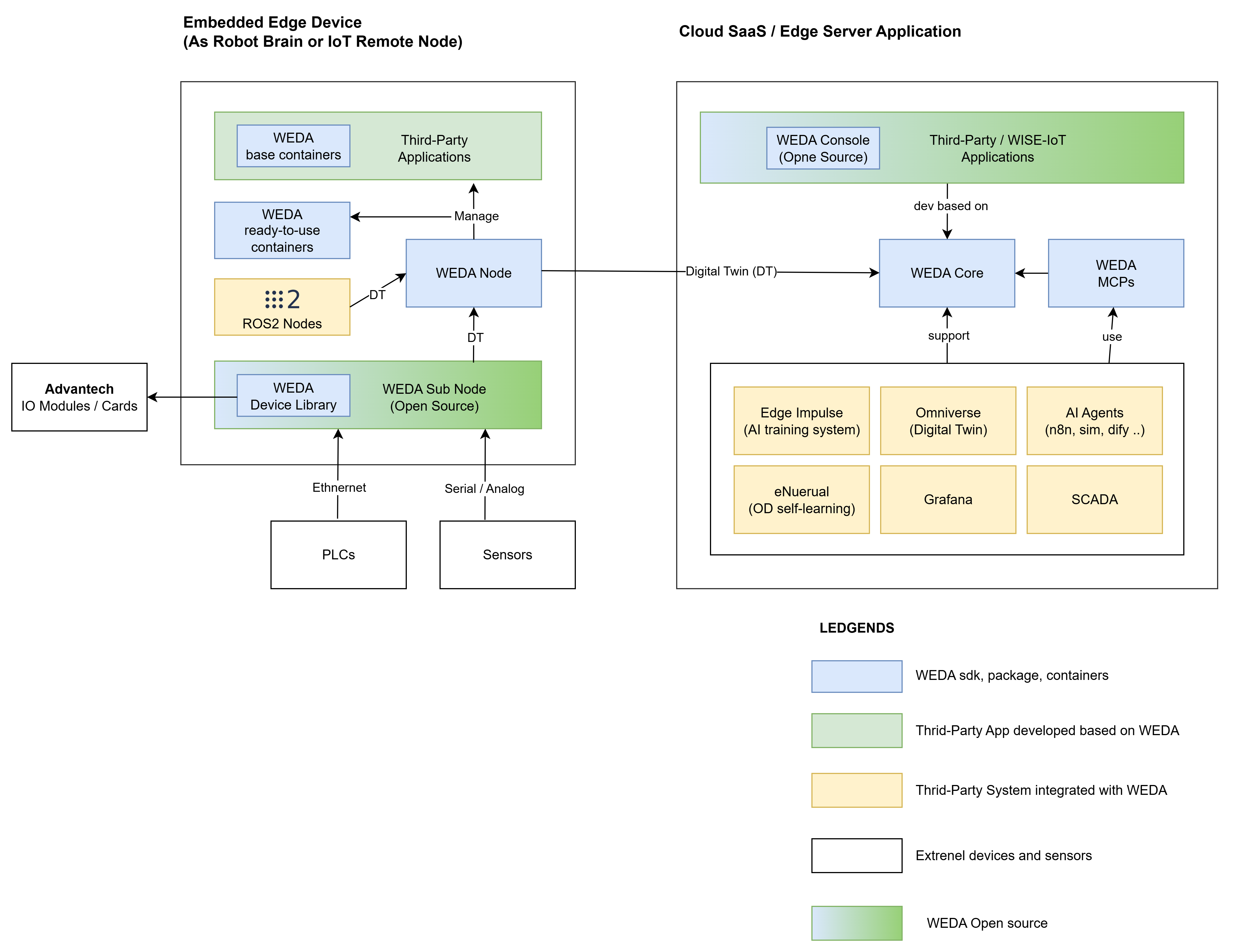
WEDA Node leverages a digital twin framework to maintain synchronized state between the back-office system and remote edge devices. The framework manages two key states:
- Desired State: The target configuration defined by users in the back-office cloud
- Reported State: The actual current state of the edge device
This bi-directional synchronization ensures that any configuration changes made in the back-office are reliably propagated to edge devices, while the actual device status is continuously reflected back to the cloud for monitoring and validation. It also provides offline tolerance, ensuring devices continue to operate even when disconnected and synchronize automatically upon reconnection.
Key Capabilities
Beyond basic state synchronization, WEDA Node acts as a central manager with four critical functions:
- Edge Container Orchestrator: Manages the lifecycle of edge container applications (e.g., Docker containers). It handles deployment, updates, and status reporting based on the Desired State from the cloud.
- SubNode Orchestrator: Acts as the management hub for all WEDA SubNodes. It handles the registration and communication of SubNodes, aggregating telemetry data and dispatching command requests to the appropriate device driver.
- Generic TCP Tunnel Connector: Provides secure remote access capabilities. It establishes a reverse tunnel allowing developers to access edge services (such as SSH, VNC, or Web interfaces) directly from the cloud without configuring complex firewall rules.
- Secured Volume: Manages encrypted storage to ensure sensitive configuration data and application states are stored securely on the edge device.